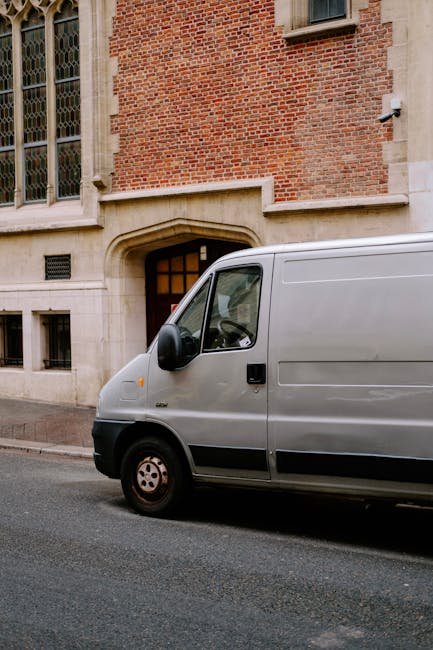
Royal Borough permits for Kensington removals vans explained
Moving in Kensington can feel deceptively simple right up until the van arrives and you realise the street is narrow, the parking is tight, and the clock is ticking. That is where Royal Borough permits for Kensington removals vans explained properly become more than just admin. They can be the difference between a calm move and a stressful, last-minute scramble for a loading space. If you are planning a home move, office relocation, or even a single large furniture pick-up, understanding how permits, parking rules, and loading restrictions work in Kensington is genuinely worth your time.
In this guide, we break everything down in plain English: what the permit situation means, when a removals van may need permission, how the process usually works, common mistakes to avoid, and how to plan around it without overcomplicating the day. Let's face it, nobody wants to be standing in the road at 8am wondering whether the van can stop there or not.
Expert summary: In Kensington, moving logistics are often decided by access rather than distance. If the van cannot stop legally and safely, the move becomes slower, more expensive, and more stressful. Planning parking and loading in advance is one of the smartest things you can do.
- Best for: home movers, landlords, tenants, businesses, and anyone moving bulky items in Kensington
- Main risk: parking or loading penalties, delays, or failed access on moving day
- Best mindset: plan the van stop first, then plan the boxes
Table of Contents
- Why Royal Borough permits for Kensington removals vans explained matters
- How Royal Borough permits for Kensington removals vans explained works
- Key benefits and practical advantages
- Who this is for and when it makes sense
- Step-by-step guidance
- Expert tips for better results
- Common mistakes to avoid
- Tools, resources and recommendations
- Law, compliance, standards, or best practice
- Options, methods, or comparison table
- Case study or real-world example
- Practical checklist
- Conclusion
- Frequently asked questions
Why Royal Borough permits for Kensington removals vans explained Matters
In Kensington, the issue is rarely the moving van itself. It is where the van can stop, how long it can stay there, and whether that stop is legal at the time you need it. Residential streets, controlled parking zones, residents' bays, single yellow lines, timed loading areas, and busy roads all create a moving puzzle. And in a place where roads are often busy before you have even had your first tea, small access issues can quickly become major delays.
When people search for Royal Borough permits for Kensington removals vans explained, they are usually trying to answer a practical question: can the van park outside my building, and if not, what do we do? That question matters because removals are time-sensitive. If the driver has to circle the block, unload from far away, or stop in the wrong place, the cost in time and energy can be surprisingly high.
There is also a trust element. A professional move should not rely on guesswork. If you are booking man with van support or a larger vehicle such as a moving truck, you want to know the plan is realistic. A legally parked van, a sensible loading setup, and a clear understanding of local restrictions make the whole day feel calmer.
People often think permits are only for huge lorries. Not quite. Even a modest van can run into trouble if it is in the wrong place at the wrong time. Kensington is not the easiest area for stop-and-go loading, so a little advance planning pays off. A lot.
How Royal Borough permits for Kensington removals vans explained Works
There are a few moving parts here, and it helps to separate them.
First, there is parking permission. In some cases, a removals van may need a dispensation, bay suspension, loading permission, or another form of parking arrangement. The exact requirement depends on where the van will stop, for how long, and what the local restrictions are on that street or estate. Not every move needs a special permit, but many do need some sort of planning.
Second, there is timing. A permit or parking arrangement can be valid only for specific hours. That matters because an early morning load may be fine on one road but completely wrong on another. It is also why a move that starts with "we should be fine" can end with "actually, the van needs to be moved now."
Third, there is practical access. Even if a stopping place is technically available, the van still needs space to open doors, manoeuvre safely, and allow items to be carried without blocking traffic. In a tightly packed Kensington street, that may mean using a shorter stop, a smaller vehicle, or a staged loading plan.
Most removals teams handle this as part of the move planning rather than leaving it to the day itself. That is especially sensible for flat moves, office relocations, and properties with awkward access. If you are arranging home moves or more complex commercial moves, access planning is not a side issue; it is the job.
In practical terms, the process often looks like this:
- Check the exact pickup and drop-off streets.
- Identify parking restrictions, loading windows, and access barriers.
- Work out whether the van can stop legally near the property.
- Arrange any necessary permission or alternative loading plan.
- Confirm the timing with the driver and the customer.
If you are using a service like removal truck hire, ask early whether the chosen vehicle size suits the road layout. Bigger is not always better, especially in streets where turning space is tight and parking is competitive. Truth be told, the "best" vehicle is often the one that can actually stop where needed.
Key Benefits and Practical Advantages
Getting the permit and parking side right brings a few very real benefits, and these are not just administrative niceties.
- Fewer delays: The van is less likely to waste time hunting for a legal stopping point.
- Lower stress: You are not making decisions in a rush while furniture is half out the door.
- Safer handling: Shorter carry distances usually mean fewer knocks, less strain, and fewer near-misses.
- Better cost control: Time lost to parking problems can turn into extra labour or waiting time.
- Cleaner customer experience: A well-planned move feels organised rather than chaotic.
There is also a subtle but important benefit: confidence. When you know the van has a proper stopping plan, you can focus on the move itself. Packing, labelling, dismantling furniture, keeping keys together, and managing lift access all become much easier when the parking piece is sorted.
This is one reason many people choose a service that can coordinate the practical side of the move. For example, if you are already arranging packing and unpacking services, it makes sense to have the transport plan equally well thought through. One smooth part of the day supports the next. Simple, but effective.
Who This Is For and When It Makes Sense
Not every move in Kensington needs the same level of permit planning. Some people can load from a driveway or private forecourt with little fuss. Others are dealing with tight communal access, permit-controlled streets, or a building where there is barely room for a cyclist to squeeze past, let alone a van.
You will usually need to think seriously about permits or parking arrangements if you are:
- moving from a flat on a busy residential road
- relocating from an office with street-side loading only
- using a larger vehicle for a full household move
- moving on a weekday when parking restrictions are stricter
- handling bulky items such as wardrobes, sofas, appliances, or beds
- moving during a busy time of year when kerb space is already under pressure
Smaller jobs can still benefit from planning, too. A one-bedroom flat move may sound simple until the van cannot stop within a reasonable distance of the entrance. That is when even a short move starts to feel like a little marathon. Especially with a mirror you are trying not to scratch, which somehow becomes the most precious thing in the room.
If you need to move items in stages, or if your job includes disposal as well as transport, services like furniture pick-up can be useful because they are usually planned around collection efficiency and access rather than just point-to-point driving.
Step-by-Step Guidance
If you want a practical way to approach this, use the following sequence. It is simple, but it works.
- Identify the exact addresses. Not just the postcode. The actual street matters far more than people expect.
- Check the access situation. Look for yellow lines, permit bays, loading restrictions, height barriers, narrow entrances, and one-way systems.
- Estimate how long loading will take. Be honest. A small flat can still take longer than you think if the stairs are awkward or the lift is tiny.
- Choose the right vehicle. A compact van may be easier to place; a larger vehicle may reduce the number of trips. It depends on the road and the volume.
- Confirm any needed permission. If a parking arrangement or permit is required, sort it before moving day rather than hoping for the best.
- Prepare the property. Reserve lift access if needed, clear hallways, and make sure boxes are labelled.
- Keep the driver informed. A five-minute update about access can save twenty minutes of confusion later.
- Have a backup plan. If the exact front door spot is unavailable, know where the van can legally load nearby.
One very practical tip: do a dry run mentally. Stand outside the property and imagine the van arriving with traffic around you, someone carrying a sofa, and a neighbour trying to squeeze their car past. If that picture feels tight, it probably is.
For office moves, the same approach applies but with more coordination. A business relocation may need a stricter loading schedule, document handling, and quicker turnaround. In those cases, office relocation services can be particularly helpful because timing and access are managed as part of the job rather than left to guesswork.
Expert Tips for Better Results
Here are the small things that make a surprisingly big difference.
- Book the parking plan early. Do not leave it until the week of the move. In Kensington, early planning is usually the calmer route.
- Use the smallest vehicle that still does the job. A huge van is not impressive if it cannot stop legally outside the property.
- Share photos of the access point. Stairs, door widths, and road space often tell the real story better than a description.
- Label the "first off" items. Put essentials at the back of the load so they can be unloaded quickly.
- Check for building rules. Some blocks have narrow time windows or estate-specific access quirks.
- Keep the route simple. A straightforward route with predictable stopping points is often better than a theoretically shorter route with awkward parking.
And here is a quiet one from experience: if you think there may be access trouble, there probably is. Better to ask the question early than to discover it when the van is already on the street and the kettle is packed. Nobody enjoys that moment.
If the move involves disposal of bulky household items as well, pairing transport with mattress and sofa disposal or other removal support can reduce the number of separate journeys. That saves time and avoids the chaos of juggling collections on different days.
Common Mistakes to Avoid
A lot of moving problems in Kensington are avoidable. Here are the big ones.
- Assuming parking is "probably fine." That little word probably causes more stress than most people realise.
- Ignoring loading restrictions. A bay may look available, but it might not be usable for the time you need.
- Booking a van before checking access. Vehicle choice should follow the street, not the other way around.
- Underestimating load time. Stairs, lifts, awkward furniture, and waiting for keys all slow things down.
- Forgetting about neighbours or shared access. A communal doorway can be the bottleneck no one expected.
- Not telling the moving team about heavy items. Appliances, safes, or large wardrobes need a different plan.
One more mistake, and it is a common one: people focus so much on boxes that they forget the van's stopping point is the real control point. The move starts at the kerb, not in the hallway.
Tools, Resources and Recommendations
You do not need a complicated toolkit to manage moving access well. You need a few practical things and a bit of order.
- Property photos: Take a picture of the front of the building, the pavement, and any barriers.
- Room-by-room inventory: Helps estimate load size and unloading order.
- Floor plans or rough sketches: Useful for office moves and larger homes.
- Parking notes: Write down what the street actually allows, not what you hope it allows.
- Service checklist: Keep a simple list for access, key collection, lift booking, and unloading priority.
It can also help to choose a moving partner that is used to Kensington conditions. A local crew tends to understand the rhythm of the area: the narrow side streets, the tight parking, the timing pressure, the whole thing. If you want a broader moving package, home moves and house removalists are worth considering when the job is more than a quick shuttle.
For homeowners who are decluttering during the move, recycling and responsible disposal can make the process feel much cleaner. The page on recycling and sustainability is a useful reminder that moving day does not have to end with a mountain of waste and regret. A bit dramatic, but you know the feeling.
Law, Compliance, Standards, or Best Practice
When talking about permits and removals vans, the safest approach is to treat compliance as a real operational issue, not a box-ticking exercise. Local parking rules, loading rules, estate rules, and building access rules can all affect whether a removal is lawful and practical. The exact requirement depends on the street, the location, the vehicle, and the timing.
Good practice usually means:
- checking local parking restrictions before the move
- using only lawful stopping points for loading and unloading
- making sure the vehicle does not block emergency access
- allowing enough time so the crew is not forced into rushed unloading
- keeping communication clear between customer and driver
There is also a duty of care angle. Removal work should be planned so people, property, and nearby road users are not put at unnecessary risk. That is why many teams keep their own health and safety approach in place, alongside sensible vehicle planning. If you want to understand how a mover handles risk and responsibility, the page on health and safety policy gives a useful sense of the standards behind the service.
For valuable or fragile items, insurance and careful handling matter too. Even a short carry from the van to the door can go wrong if the route is awkward. It is worth reviewing insurance and safety so you know what protections and working practices are in place. Best practice is not flashy; it is just quietly reliable.
Options, Methods, or Comparison Table
There is no single best way to manage a Kensington move. The right option depends on access, load size, and how much control you want over the day.
| Option | Best for | Strengths | Limitations |
|---|---|---|---|
| Small van with tight planning | Light moves, limited access, short stays | Easier to position, often more flexible on narrow streets | May require more trips |
| Standard removals van | Typical home or flat moves | Balanced capacity and manoeuvrability | Still needs parking awareness |
| Larger moving truck | Full-house or office moves | Fewer trips, better for volume | Harder to park on constrained streets |
| Man and van service | Smaller or medium jobs, flexible collection | Adaptable, practical for quick turnarounds | Not ideal for very large loads |
If you are not sure which route to take, start with the street. If the street is awkward, go smaller and smarter. If access is easier than expected, a larger vehicle may make sense. That decision alone can save a lot of bother.
For straightforward collection jobs, man and van support can be a neat fit. For bigger or more structured loads, a dedicated vehicle such as removal truck hire may be the better choice, provided parking and loading space are realistic.
Case Study or Real-World Example
Here is a typical Kensington-style scenario.
A family is moving out of a first-floor flat near a busy residential street. The contents are not enormous, but there is a sofa, two beds, boxes of books, a dining table, and a couple of fragile lamps. The road outside is controlled parking only, with limited loading space and regular traffic passing through. On paper, it looks manageable. On the morning of the move, it would have been chaos if nothing had been planned.
Instead, the move is organised around a legal stop point nearby, the heaviest items are loaded first, and the crew knows which pieces need extra care. The van does not sit outside the entrance all day. It arrives, loads efficiently, and leaves before the street becomes a problem. The key difference was not force. It was preparation.
The customer later realises that the packing took less time than the access planning. Which is, honestly, how it often goes in Kensington. Access dictates the tempo. Always has, really.
In a commercial setting, the same logic applies with even more pressure. For example, an office relocation may include files, IT equipment, desks, and confidential items. That is where structured services such as confidential shredding and office relocation services can help keep both the logistics and the handling standards under control.
Practical Checklist
Use this checklist before move day. It keeps things grounded.
- Confirm the pickup and drop-off addresses.
- Check parking and loading restrictions on both streets.
- Decide whether the van size suits the available access.
- Measure bulky items that may need special handling.
- Ask about lift access, stair width, and any building rules.
- Book any required parking arrangement or permit in good time.
- Label fragile items and first-off boxes clearly.
- Tell the moving team about awkward furniture or appliances.
- Keep keys, codes, and contact numbers handy.
- Have a backup parking or waiting plan if the first spot is unavailable.
One last thing: if you are disposing of unwanted appliances during the move, check whether they should be handled separately. Services like fridge and appliance removal can save you from trying to cram everything into one day. And if you are clearing out old electronics or paperwork, it is usually worth dealing with those items before the main load starts. Less clutter. Less noise. Less "where did that cable go?"
Conclusion
Royal Borough permits for Kensington removals vans explained simply means this: do not leave access to chance. In Kensington, a move is rarely just about boxes and furniture. It is about where the van can stop, how long it can stay there, and whether the whole operation is set up to work legally and smoothly.
If you plan the parking properly, choose the right vehicle, and communicate clearly with the team, the move becomes far more manageable. The day still has enough moving parts, to be fair, but at least the kerbside piece will not be one of them.
Get a free quote today and see how much you can save.
And if you are still at the planning stage, that is absolutely fine. A calm, well-structured move starts with one sensible decision at a time.
Frequently Asked Questions
Do I always need a permit for a removals van in Kensington?
Not always. It depends on the street, the time of day, the type of parking restriction, and how long the van needs to stay. Some moves can be done using an existing loading space or a legal stopping point, while others need formal parking permission or a different loading plan.
What is the difference between a permit and a loading arrangement?
A permit usually refers to formal permission to stop or park in a restricted area. A loading arrangement may be more limited and tied to a short stop for moving goods in or out. The exact terminology can vary by situation, so it is best to check the specific location rather than assuming the same rule applies everywhere.
Can a small van avoid permit problems?
Sometimes, yes. A smaller van can be easier to place on narrow Kensington streets and may fit into spaces larger vehicles cannot use. But size alone does not remove parking restrictions. The van still needs to stop lawfully and safely.
How far in advance should I sort parking for moving day?
As early as possible. Kensington streets can be busy and access can be tight, so leaving it until the last minute is risky. Even if your move is small, it is worth checking parking early so there are no surprises.
What happens if the van cannot park outside my property?
The crew may need to use the nearest legal loading point or adjust the unloading plan. That can add time and effort, especially if items have to be carried further. In some cases, the vehicle may need to move on and return when space becomes available.
Do office moves have different parking needs from home moves?
Often, yes. Office relocations can involve more items, stricter timing, and more people using the same building access. That means parking and loading planning becomes even more important. A good office move usually starts with a clear access plan.
Is it worth using a man and van service for a Kensington move?
For smaller or more flexible jobs, it can be a very practical choice. A man and van setup is often easier to adapt to tight streets and short loading windows. For larger homes or more demanding access, a bigger vehicle may be a better fit.
Can I combine disposal with my removals job?
Yes, in many cases it makes sense to do that. If you are clearing bulky items or unwanted furniture, combining transport with disposal-focused services can reduce the number of separate trips. It also keeps the move tidier, which is no bad thing.
What should I tell the removals team before the move?
Tell them about the street access, parking restrictions, heavy items, lifts, stairs, fragile belongings, and any building rules. The more practical detail you share, the easier it is to plan the van stop and the loading sequence.
How do I know which van size is right?
Start with the volume of items and the access at both properties. A large van can reduce trips, but it may be awkward on a tight road. A smaller vehicle can be more flexible, though it may need more journeys. The best choice is usually the one that fits the street as well as the load.
Are there safety issues with street loading in Kensington?
There can be. Busy traffic, narrow pavements, and limited stopping space all create risk if the loading is rushed or poorly planned. That is why a sensible access plan and careful handling matter so much. Safety is not the glamorous part of moving, but it is the part that keeps everything on track.
What is the best first step if I am not sure about permits?
Start by checking the exact pickup and drop-off streets, then assess the parking and loading restrictions. From there, decide whether you need formal permission, a smaller van, or a different loading plan. If you are unsure, ask early. It saves a lot of trouble later.
If you want help planning a move that feels organised from the first van stop to the last box, take the next step when you are ready. A careful move in Kensington is rarely about doing more; it is about doing the right things in the right order.